
August 24, 2026 – Message from Our Lord Jesus Christ to Luz de Maria
§1 Message of Our Lord
§2 Commentary by Luz de Maria
§3 All the Volcanoes in the World
(Reading: 3 min.)
§1
«Beloved children,
I bless you; I invite each of you, My children, to consciously examine yourselves for your wrongdoings and actions.
Children, I have endowed you with the ability to look within yourselves and see yourselves as you truly are.
You must recognize this now, before it is too late! For whoever does not recognize themselves as they truly are is unable to ask for forgiveness, to forgive themselves, or to forgive their brothers and sisters.
Have you noticed that a compass shows those who use it the direction they should take?
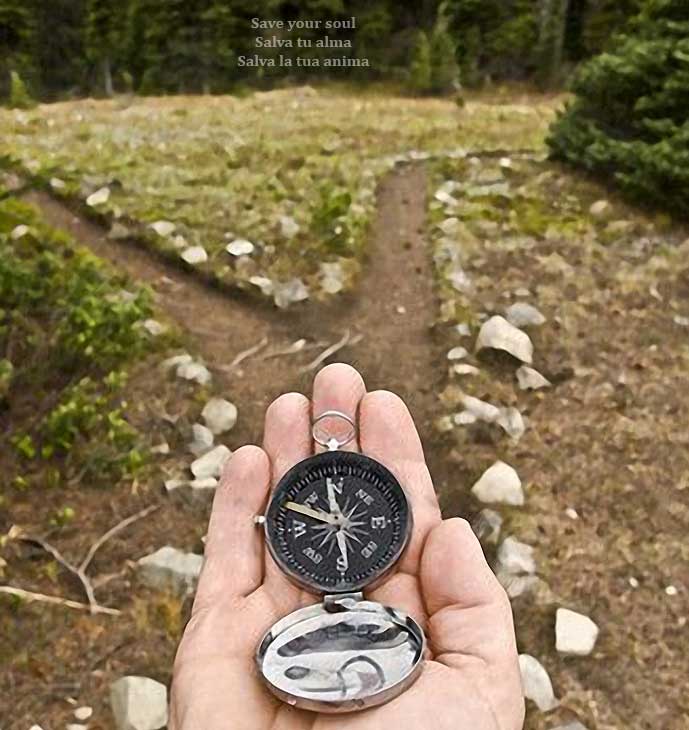
You possess a conscience, which is like that compass that points out right and wrong to most of My children. Use it for your own good, to reject evil, and to be able to evaluate yourselves without looking to anyone else.
Understand, My children, that salvation is personal, and condemnation is personal!
You concern yourselves with your brothers and sisters; you become judges of your brothers and sisters—but what about Me?
Who am I?
Whom will I judge?
You yourselves.
You mistakenly think that I judge the great sins the most; yes, I do judge them, but you sin so frequently that you would not believe it if I were to tell you the number of small acts and deeds that are sins—and very serious ones at that.
Humanity embraces evil because goodness demands a specific conduct from them—one in which they must strive to fulfill what My House asks of them to be My true children.
How many live in spirit and truth?
Who are today’s Pharisees?
Those who preach from a foundation built on swampy ground and condemn their fellow human beings.
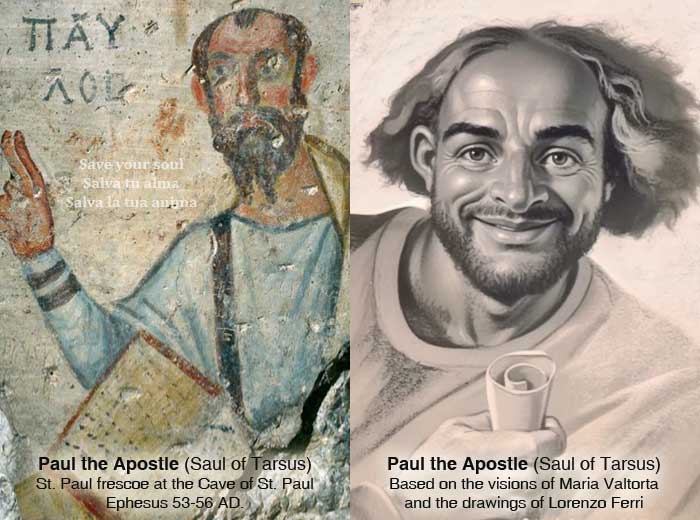
“Therefore, you have no excuse, whoever you may be, when you judge others; for in judging others, you condemn yourself, since you do the very same things” (St. Paul of Tarsus, Letter to the Romans, Chapter 2, Verse 1).
****
When those who accused the woman caught in adultery were challenged by Me—“Let the one among you who is without sin cast the first stone” (John 8:1–11)—their consciences turned against them, one by one, and, convicted by their own actions, they withdrew, beginning with the oldest.
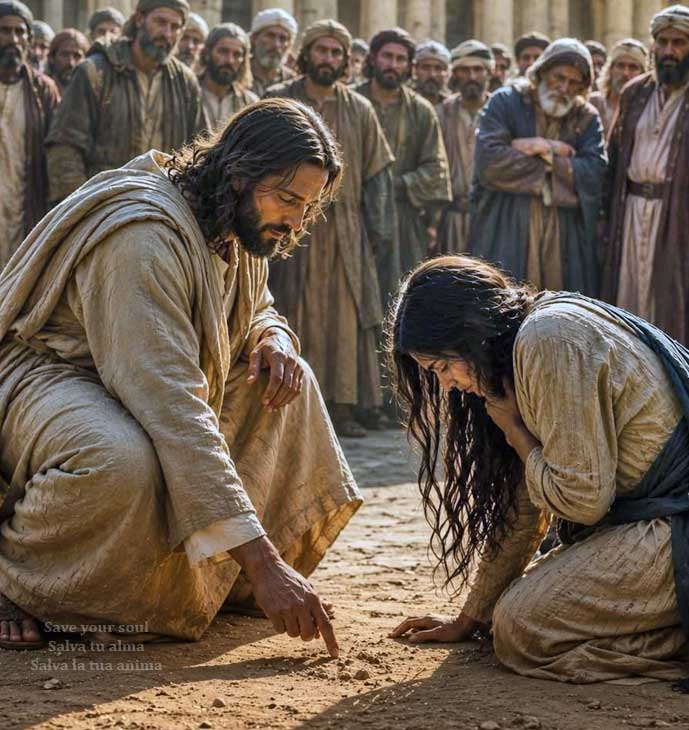
(John 8:1–11): «Jesus went to the Mount of Olives. At daybreak, He returned to the Temple, and all the people came to Him. Then He sat down and began to teach them. The scribes and the Pharisees brought Him a woman who had been caught in the act of adultery. Placing her in the midst of the crowd, they said to Jesus, ‘Teacher, this woman has been caught in the very act of adultery. In the Law, Moses commanded us to stone such women. What do you say?’ They said this to test him, so that they might have grounds to accuse him. But Jesus, bending down, began to write on the ground with his finger. As they kept pressing him, he stood up and said to them, “Let the one among you who is without sin cast the first stone.” Then he bent down again and continued writing on the ground. When they heard these words, they went away one by one, beginning with the elders. Jesus was left alone with the woman, who was still standing there. He stood up and asked her, “Woman, where are your accusers? Has no one condemned you?” She replied, “No one, Lord.” “Neither do I condemn you,” Jesus said. “Go, and from now on, do not sin anymore”».
Some of My children usurp My authority, taking on the role of judge, and this is pride. My children consider themselves above My Law, desiring to occupy My sole place as Judge.
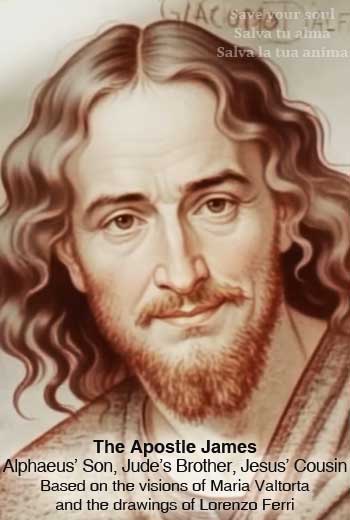
“Brothers and sisters, do not criticize one another. Whoever speaks evil of a brother or acts as his judge speaks against the Law and sets himself up as a judge of the Law. But you, who judge the Law—is it your place to judge the Law or to obey it? There is only one Judge: the One who made the Law and who has the power to save and to condemn. But who are you to judge your neighbor?” (The Letter of St. James, Chapter 4, Verses 11–12).
At this time when humanity is in danger, people continue to be foolish, committing the same mistakes, and will continue to suffer.
Your sin is so great that you yourselves are chastising yourselves and suffering because of your folly in going against Me.
The earth will continue to shake in various places with a force unlike anything seen before; at the same time, other countries will be flooded by water and blanketed by volcanic ash.
Oh, humanity, how you will lament when a part of a country disappears!
The volcanoes have awakened [1] [§3] and will continue to awaken, just as My House foretold.
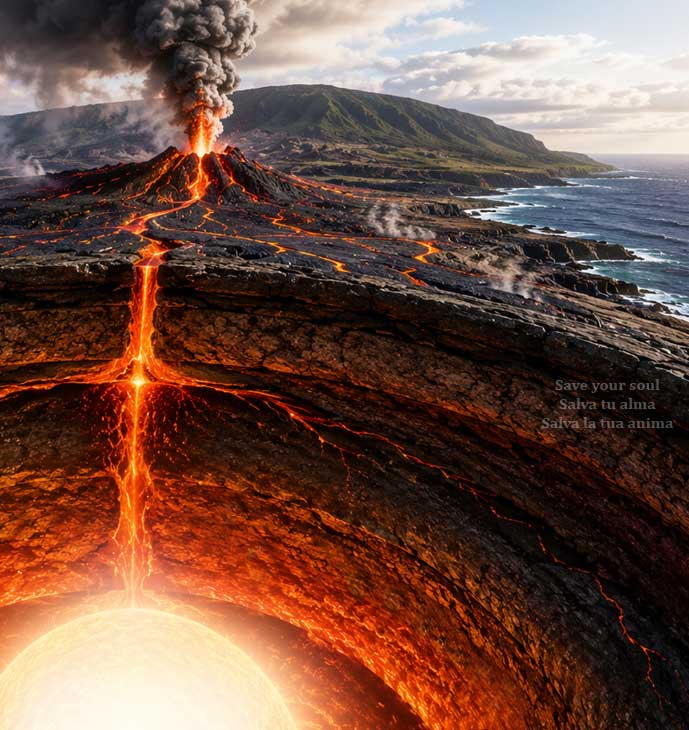
The sun continues to contribute to the earthquakes on Earth, and the man of power in the world insists on starting the great and dreaded war.
Prepare yourselves, My children, prepare yourselves!
The great blackout [2] is underway; it shows no sign of stopping, and yet you continue to disobey.

Food is in short supply [3], and how am I to provide My children with the very same Manna if they do not believe?

You urgently need conversion; do not take shortcuts, My children, for in those shortcuts you will encounter greater difficulty and will not find My Way.
Do not stray from the true path; be faithful to the Tradition of My Church; walk in the right ways, My children; this is no time to despise My Mercy.
Your Jesus».
Hail Mary Most Pure,
without sin conceived
Hail Mary Most Pure,
without sin conceived
Hail Mary Most Pure,
without sin conceived
§2
Commentary by Luz de Maria

«Brothers and sisters, Our beloved Jesus calls us to reflect and examine our own consciences. It is a very serious call—far too serious—in which He tells us that each of us must humbly recognize ourselves in order to identify our mistakes and thus willingly seek forgiveness for our sins. Above all, He gives us biblical examples of how we sin most often and tells us that it is in the small things—without neglecting the great sins—but that we gradually accumulate these small errors.
He also sternly warns us how dangerous it is to take on the role of judge, drawing on biblical passages, so that we do not forget that those who condemn others often commit similar faults themselves, and He reminds us that only God has the authority to judge.
Our Lord Jesus Christ warns us of the consequences of sin and of refusing to repent. All of this leads to natural disasters that severely affect humanity. We are called to remain in the path of righteousness, to remain in the faith, and to hold fast to that spiritual desire to seek Divine Mercy, before it is too late.
He also tells us that He wishes to send us, if necessary, the Manna from Heaven; but since we have so little faith, how can we ask Him—or how will He feed those who disobey Him—if they themselves refuse to receive what Our Lord Jesus Christ offers us?
Let’s be realistic, brothers and sisters: the events of this moment are profound, and Our Lord offers us His Way, His Mercy, and calls us to remain in His Church, faithfully following the Church’s moral and spiritual guidance—which helps us live according to the Teachings of Our Lord Jesus Christ and attain eternal life. Amen».
§3
All the Volcanoes in the World
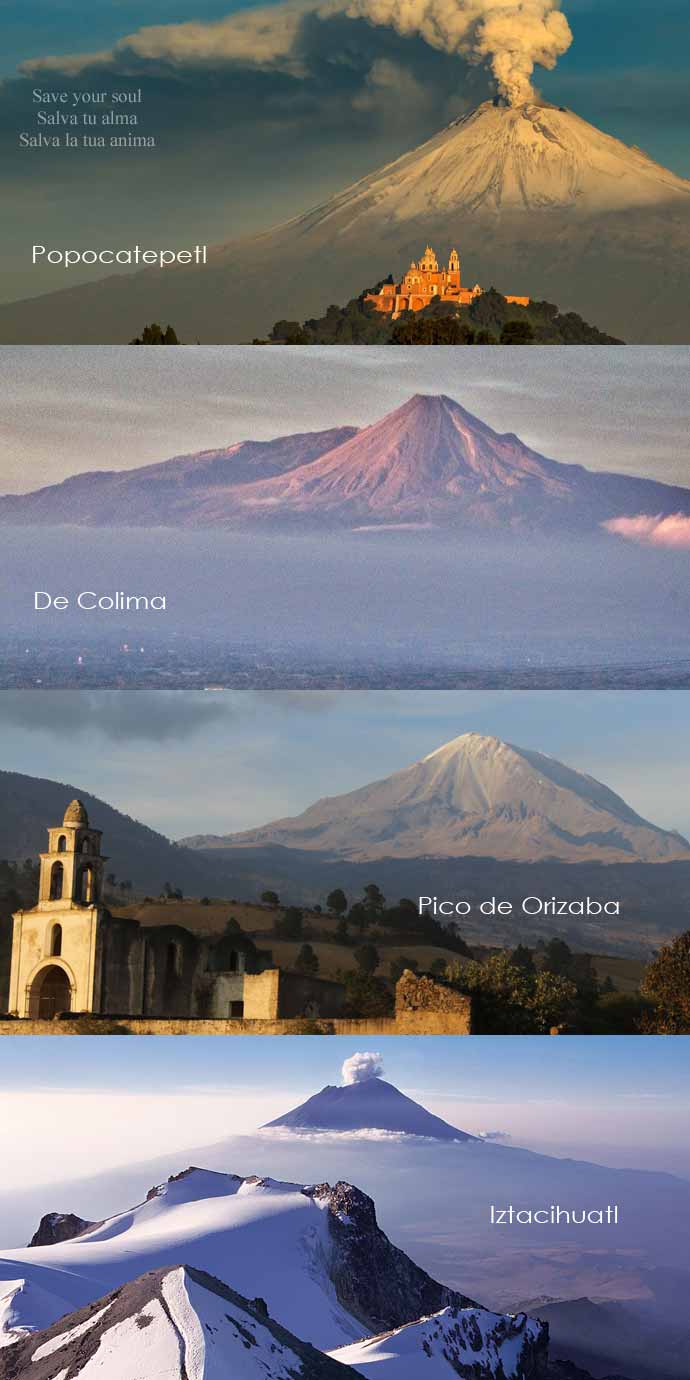
- Total Volcanoes: 150
- Countries: 43
- Active: 146
- Types: 30
Caldera
Caldera (Supervolcano)
Caldera with intra-caldera stratovolcanoes
Caldera with post-caldera stratovolcano
Complex Stratovolcano
Complex volcano
Crater rows / Fissure system
Lava dome complex / Caldera
Lava dome(s)
Shield (pyroclastic)
Shield volcano
Shield volcano (complex with stratovolcano)
Shield volcano / Caldera complex
Shield volcano complex
Somma-stratovolcano
Stratovolcano
Stratovolcano (compound)
Stratovolcano (subglacial)
Stratovolcano complex
Stratovolcano with fissure system
Stratovolcano with ice-filled caldera
Stratovolcano within caldera complex
Stratovolcano(es)
Stratovolcano(es) / Caldera complex
Subglacial volcano (fissure vents)
Submarine Stratovolcano
Volcanic field
Volcanoes:
- Deception Island, Antarctica, Caldera, 602 m, Active, 1970
- Mount Erebus, Antarctica, Stratovolcano, “3, 794 m”, Active — continuous eruption, 2025 CE (ongoing)
- Cerro Blanco, Argentina, Caldera, “4, 670 m”, Dormant, ~2300 BC
- Heard Island (Big Ben), Australia, Stratovolcano, “2, 745 m”, Active — erupting, 2025
- Mount Cameroon, Cameroon, Stratovolcano, “4, 095 m”, Active, 2000
- Calbuco, Chile, Stratovolcano, “1, 974 m”, Active, 2015
- Cerro Azul, Chile, Stratovolcano, “3, 788 m”, Active, 1967
- Cerro Hudson, Chile, Stratovolcano with ice-filled caldera, “1, 905 m”, Active, 2011
- Chaitén, Chile, Caldera, “1, 122 m”, Active, 2008–2011
- Láscar, Chile, Stratovolcano(es), “5, 592 m”, Active, 2022–2023
- Llaima Volcano, Chile, Stratovolcano, “3, 125 m”, Active, 2009
- Nevados de Chillán, Chile, Stratovolcano (compound), “3, 180 m”, Active, 2022
- Planchón-Peteroa, Chile, Stratovolcano(es), “3, 977 m”, Active, 2025
- Puyehue-Cordón Caulle, Chile, Stratovolcano with fissure system, “2, 236 m”, Active, 2011–2012
- Villarrica, Chile, Stratovolcano, “2, 847 m”, Active, 2025 (ongoing since 2014)
- Copahue, Chile-Argentina, Stratovolcano, “2, 953 m”, Active, 2024
- Tupungatito, Chile-Argentina, Stratovolcano, “5, 660 m”, Active, 1987
- Changbaishan, China-North Korea, Stratovolcano, “2, 744 m”, Active, 1903
- Galeras, Colombia, Complex volcano, “4, 276 m”, Active, 2014
- Nevado del Ruiz, Colombia, Stratovolcano, “5, 279 m”, Active, 2014–present
- Nevado del Tolima, Colombia, Stratovolcano, “5, 215 m”, Active, 1943
- Puracé, Colombia, Stratovolcano(es), “4, 650 m”, Active, 2025
- Arenal Volcano, Costa Rica, Stratovolcano, “1, 670 m”, Active, 2010
- Irazú, Costa Rica, Stratovolcano, “3, 436 m”, Active, 1977 (possible 1994)
- Poás, Costa Rica, Stratovolcano, “2, 697 m”, Active, 2025
- Rincón de la Vieja, Costa Rica, Complex volcano, “1, 729 m”, Active, 2021–2024
- Turrialba Volcano, Costa Rica, Stratovolcano, “3, 340 m”, Active, 2022
- Mount Nyiragongo, DR Congo, Stratovolcano, “3, 470 m”, Active, 2002–present (ongoing)
- Nyamulagira, DR Congo, Shield, “3, 058 m”, Active, 2025
- Cotopaxi, Ecuador, Stratovolcano, “5, 911 m”, Active, 2023
- Fernandina, Ecuador, Shield volcano, “1, 476 m”, Active, 2024
- Guagua Pichincha, Ecuador, Stratovolcano, “4, 784 m”, Active, 2002
- Reventador, Ecuador, Stratovolcano, “3, 562 m”, Active, 2025 (ongoing since 2008)
- Tungurahua, Ecuador, Stratovolcano, “5, 023 m”, Active, 2016
- Izalco, El Salvador, Stratovolcano, “1, 950 m”, Dormant (last erupted 1966), 1966
- San Miguel, El Salvador, Stratovolcano, “2, 130 m”, Active, 2022–2023
- Santa Ana (Ilamatepec), El Salvador, Stratovolcano, “2, 381 m”, Active, 2005
- Erta Ale, Ethiopia, Shield volcano, 585 m, Active, 1967–present (ongoing)
- Taveuni, Fiji, Shield, “1, 241 m”, Dormant, ~1550 CE
- Piton de la Fournaise, France, Shield volcano, “2, 632 m”, Active, 2023
- Soufrière Guadeloupe, France (Guadeloupe), Stratovolcano, “1, 467 m”, Active, 1977
- Mount Pelée, France (Martinique), Stratovolcano, “1, 372 m”, Active, 1932
- Santorini Volcano, Greece, Shield volcano / Caldera complex, 367 m, Active, 1950
- Pacaya, Guatemala, Complex volcano, “2, 569 m”, Active, 2021
- Santa María, Guatemala, Stratovolcano, “3, 745 m”, Active, 2025 (Santiaguito dome ongoing)
- Volcán de Fuego, Guatemala, Stratovolcano, “3, 799 m”, Active, 2025 (ongoing since 2002)
- Bárðarbunga, Iceland, Stratovolcano (subglacial), “2, 000 m”, Active, 2014–2015
- Eyjafjallajökull, Iceland, Stratovolcano, “1, 651 m”, Active, 2010
- Grímsvötn, Iceland, Caldera, “1, 719 m”, Active, 2011
- Hekla, Iceland, Stratovolcano, “1, 491 m”, Active, 2000
- Katla, Iceland, Subglacial volcano (fissure vents), “1, 490 m”, Active, 1918
- Reykjanes, Iceland, Crater rows / Fissure system, 140 m, Active, 2025
- Barren Island, India, Stratovolcano, 354 m, Active, 2025
- Gamalama, Indonesia, Stratovolcano(es), “1, 714 m”, Active, 2018
- Karangetang, Indonesia, Stratovolcano, “1, 797 m”, Active, 2023
- Kelud, Indonesia, Stratovolcano, “1, 730 m”, Active, 2014
- Krakatau, Indonesia, Caldera, 285 m, Active, 2021–2023
- Marapi, Indonesia, Complex stratovolcano, “2, 885 m”, Active (erupting), 2025
- Mount Merapi, Indonesia, Stratovolcano, “2, 910 m”, Active, 2020 – present (ongoing)
- Mount Semeru, Indonesia, Stratovolcano, “3, 657 m”, Active, 2025 (ongoing)
- Mount Tambora, Indonesia, Stratovolcano, “2, 850 m”, Active, 1967
- Raung, Indonesia, Stratovolcano, “3, 260 m”, Active, 2025
- Tengger Caldera, Indonesia, Stratovolcano(es) / Caldera complex, “2, 329 m”, Active, 2023
- Campi Flegrei, Italy, Caldera, 458 m, Active, 1538
- Mount Etna, Italy, Stratovolcano(es), “3, 357 m”, Active — currently erupting, 2022–2025 (ongoing)
- Mount Vesuvius, Italy, Somma-stratovolcano, “1, 281 m”, Active, 1944
- Stromboli, Italy, Stratovolcano, 924 m, Persistently Active, 2025 (ongoing since 1934)
- Vulcano, Italy, Stratovolcano(es), 500 m, Dormant (active fumaroles), 1888–1890
- Asamayama, Japan, Complex volcano, “2, 568 m”, Active, 2019
- Izu-Oshima, Japan, Stratovolcano, 746 m, Active, 1990
- Kikai Caldera, Japan, Caldera, 704 m, Active, 2025
- Kirishimayama, Japan, Shield volcano complex, “1, 700 m”, Active, 2025
- Miyakejima, Japan, Stratovolcano, 775 m, Active, 2010
- Mount Aso (Asosan), Japan, Caldera, “1, 592 m”, Active, 2021
- Mount Fuji, Japan, Stratovolcano, “3, 776 m”, Active, 1707 (Hōei eruption)
- Sakurajima, Japan, Caldera with post-caldera stratovolcano, “1, 117 m”, Active, 2025 (ongoing)
- Shikotsu, Japan, Caldera, “1, 320 m”, Active, 1981
- Zaozan, Japan, Complex volcano, “1, 841 m”, Active, 1940
- El Chichón, Mexico, Lava dome(s), “1, 150 m”, Active, 1982
- Michoacán-Guanajuato, Mexico, Volcanic field, “3, 860 m”, Active, 1943-1952 (Parícutin)
- Pico de Orizaba, Mexico, Stratovolcano, “5, 564 m”, Active, 1846
- Popocatépetl, Mexico, Stratovolcano, “5, 393 m”, Active, 2025 (ongoing since 2005)
- Volcán de Colima, Mexico, Stratovolcano, “3, 850 m”, Active, 2019
- Tacaná, Mexico-Guatemala, Stratovolcano, “4, 064 m”, Active, 1986
- Mount Ruapehu, New Zealand, Stratovolcano, “2, 797 m”, Active, 2007
- Okataina, New Zealand, Lava dome complex / Caldera, “1, 111 m”, Active, 1981
- Taranaki, New Zealand, Stratovolcano, “2, 518 m”, Active, ~1800 CE
- Tongariro, New Zealand, Stratovolcano(es), “1, 978 m”, Active, 2012
- Whakaari / White Island, New Zealand, Stratovolcano(es), 294 m, Active, 2025
- Concepción, Nicaragua, Stratovolcano, “1, 700 m”, Active, 2024
- Masaya Volcano, Nicaragua, Caldera, 594 m, Active — currently erupting, 2015–present
- Momotombo, Nicaragua, Stratovolcano, “1, 270 m”, Active, 2016
- San Cristóbal, Nicaragua, Stratovolcano, “1, 745 m”, Active, 2024
- Telica, Nicaragua, Stratovolcano complex, “1, 036 m”, Active (erupting 2025), 2025
- Jan Mayen (Beerenberg), Norway, Stratovolcano, “2, 277 m”, Active, 1985
- Bagana, Papua New Guinea, Lava cone, “1, 855 m”, Active, 2025 (ongoing since 2000)
- Manam Volcano, Papua New Guinea, Stratovolcano, “1, 807 m”, Active — currently erupting, 2018-present
- Rabaul, Papua New Guinea, Caldera, 688 m, Active, 2014
- Ulawun, Papua New Guinea, Stratovolcano, “2, 334 m”, Active (erupting 2025), 2025
- Witori, Papua New Guinea, Caldera, 724 m, Active, 2012
- El Misti, Peru, Stratovolcano, “5, 793 m”, Active, 1985
- Sabancaya, Peru, Stratovolcano(es), “5, 960 m”, Active — erupting, 2025 (ongoing since 2016)
- Ubinas, Peru, Stratovolcano, “5, 608 m”, Active, 2024
- Bulusan, Philippines, Stratovolcano(es), “1, 535 m”, Active, 2025
- Kanlaon, Philippines, Stratovolcano, “2, 422 m”, Active, 2025
- Mayon Volcano, Philippines, Stratovolcano, “2, 462 m”, Active, 2024
- Mount Pinatubo, Philippines, Stratovolcano, “1, 486 m”, Active, 2021
- Taal Volcano, Philippines, Caldera, 311 m, Active, 2024–2025
- Agua de Pau, Portugal, Stratovolcano, 947 m, Active, 1564
- Furnas, Portugal, Stratovolcano, 805 m, Active, 1630
- Sete Cidades, Portugal, Stratovolcano, 842 m, Active, 1880
- Terceira, Portugal, Stratovolcano(es), “1, 023 m”, Active, 1998–2000 (submarine)
- Avachinsky, Russia, Stratovolcano, “2, 717 m”, Active, 2001
- Bezymianny, Russia, Stratovolcano, “2, 882 m”, Active, 2025
- Chikurachki, Russia, Stratovolcano, “1, 781 m”, Active, 2023
- Gorely Volcano, Russia, Caldera, “1, 799 m”, Active, 2010
- Karymsky, Russia, Stratovolcano, “1, 513 m”, Active (erupting), 2025
- Klyuchevskoy, Russia, Stratovolcano, “4, 754 m”, Active, 2025
- Krasheninnikov, Russia, Caldera with intra-caldera stratovolcanoes, “1, 816 m”, Active, 2025
- Mutnovsky, Russia, Complex volcano, “2, 288 m”, Active, 2000
- Sheveluch, Russia, Stratovolcano, “3, 283 m”, Active, 1999–present (ongoing)
- Tolbachik, Russia, Shield volcano (complex with stratovolcano), “3, 611 m”, Active, 2012–2013
- Soufrière St. Vincent, Saint Vincent and the Grenadines, Stratovolcano, “1, 220 m”, Active, 2021
- Kavachi, Solomon Islands, Submarine Stratovolcano, -20 m, Active, 2014 (uncertain activity to 2024)
- Tinakula, Solomon Islands, Stratovolcano, 796 m, Active, 2018–present (ongoing)
- La Palma, Spain, Stratovolcano(es), “2, 426 m”, Active, 2021 (Tajogaite)
- Tenerife (Teide), Spain, Stratovolcano within caldera complex, “3, 715 m”, Active, 1909 CE
- Ol Doinyo Lengai, Tanzania, Stratovolcano, “2, 962 m”, Active, 2017–present
- Fonualei, Tonga, Stratovolcano, 188 m, Active, 1957
- Home Reef, Tonga, Submarine Stratovolcano, -10 m, Active, 2025
- Hunga Tonga-Hunga Ha’apai, Tonga, Caldera, 114 m, Active, 2022
- Niuafo’ou, Tonga, Shield, 260 m, Active, 1946
- Karthala, Union of the Comoros, Shield volcano, “2, 350 m”, Active, 2007
- Soufrière Hills, United Kingdom (Montserrat), Complex Stratovolcano, 915 m, Active, 2013
- Akutan, United States, Stratovolcano, “1, 303 m”, Active, 1992
- Crater Lake, United States, Caldera, “2, 487 m”, Dormant, ~2850 BC
- Kilauea, United States, Shield volcano, “1, 222 m”, Active — most recent eruption January 2025, 2025
- Mauna Loa, United States, Shield volcano, “4, 170 m”, Active, 2022
- Mount Rainier, United States, Stratovolcano, “4, 392 m”, Active, ~1450 CE
- Mount St. Helens, United States, Stratovolcano, “2, 549 m”, Active, 2004–2008
- Novarupta, United States, Caldera, 841 m, Active, 1912
- Pavlof Volcano, United States, Stratovolcano, “2, 493 m”, Active, 2021-2022
- Redoubt Volcano, United States, Stratovolcano, “3, 108 m”, Active, 2009
- Shishaldin, United States, Stratovolcano, “2, 857 m”, Active, 2023
- Yellowstone Caldera, United States, Caldera (Supervolcano), “2, 805 m”, Active, “~70, 000 years ago (lava flow)”
- Ambae, Vanuatu, Shield, “1, 496 m”, Active — erupting frequently, 2025
- Ambrym, Vanuatu, Shield (pyroclastic), “1, 334 m”, Active, 2024
- East Epi, Vanuatu, Stratovolcano(es), 833 m, Active, 2023
- Gaua, Vanuatu, Stratovolcano, 729 m, Active, 2022
- Lopevi, Vanuatu, Stratovolcano, “1, 413 m”, Active, 2007
****
- On volcanic activity: read…
https://revelacionesmarianas.com/ingles/especiales/volcanes.html - On the massive blackout: read…
https://revelacionesmarianas.com/ingles/especiales/apagon.html - On the famine: read…
https://revelacionesmarianas.com/italiano/especiales/hambruna.html
Source: https://revelacionesmarianas.com/english.htm


 God the Father: «


 "If you knew how you shine after duly approaching the Sacrament of Confession. "Jesus is in the Confessional and He hears every word, sees into every corner of your heart and Is eager to bestow the graces inherent in His Forgiveness.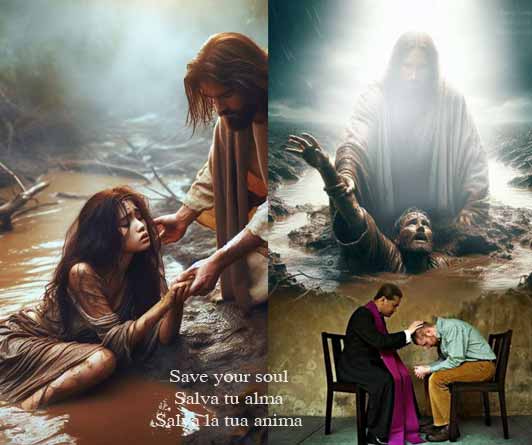
 "I ask to end to this abomination! No more of extraordinary Ministers of the Eucharist, no more of Communions in the hand!"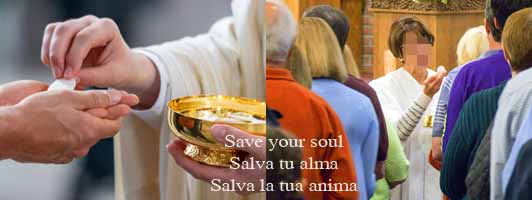
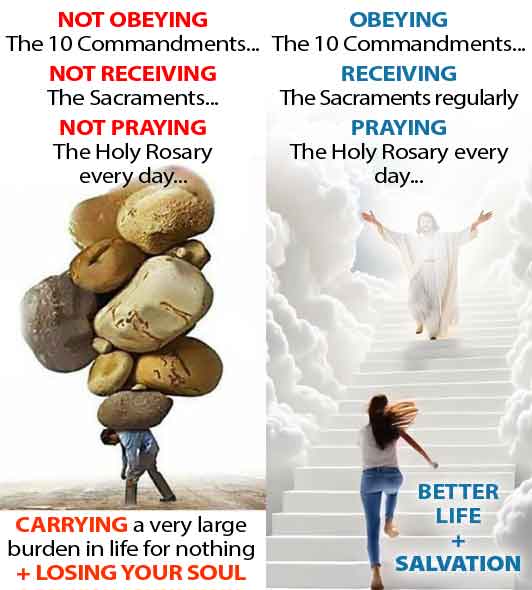
 "Oh Jesus of Divine Mercy, hear my pleadings to you, for I am here to do your Will!"
 "I place myself in the presence of the Most Holy Trinity (Father, Son, and Holy Spirit) and by the power of the Blood of Our Lord Jesus Christ, I break, undo, trample, annihilate, render ineffective, and erase from my physical, psychic, biological, and spiritual being every curse that has been placed on me, on my family and family tree, on any person, family member, or ancestor through acts of occultism or spiritism. By the power of the Precious Blood of Our Lord Jesus Christ and through the intercession of the Blessed Virgin Mary, St. Michael, St. Gabriel, and St. Raphael, I break and render ineffective every curse, whatever its nature, in the Name of our Lord Jesus Christ. Amen (Repeat the prayer 3 times)"
  "O glorious St. Joseph! by your profound humility, by your unalterable meekness, by your invincible patience, by your angelic purity and perfect fidelity that made you a timely imitator of the virtues of Jesus and Mary, I ask you to console me in all my sorrows, to guide me in all my doubts, to defend me in all temptations, to deliver me from all spiritual and material dangers; to extend your arm against all my visible and invisible enemies, breaking and destroying all the snares and barriers that they tend and arm against me. Amen."
  "Oh, blessed Saint Michael, protect us from the attacks and snares of the evil spirits because you know full well that we are poor mortals, fragile and weak, in need of the Mercy of God and of your protection to fulfill the mission that Heaven has commissioned to us. Oh, Saint Michael, may your victorious cry: “who is like God? no one is like God”, suppress and cast into Hell satan and all the evil spirits who prowl about the world seeking the destruction of souls. Amen"
 Come, Holy Spirit, send to us from Heaven a ray of your light. Come, Father of the poor, come, giver of gifts, come, light of hearts. Perfect comforter, sweet guest of the soul, sweetest relief. In toil, rest, in heat, shelter, in weeping comfort. O most blessed light, invade into the depths the hearts of your faithful. Without your strength nothing is in man, nothing is without fault. Wash what is sordid, bathe what is parched, heal what bleeds. Bend that which is stiff, warm that which is icy, straighten that which is astray. Give to your faithful who trust in you alone your Holy Gifts. Give virtue and reward, give holy death, give eternal joy. Amen.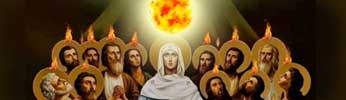
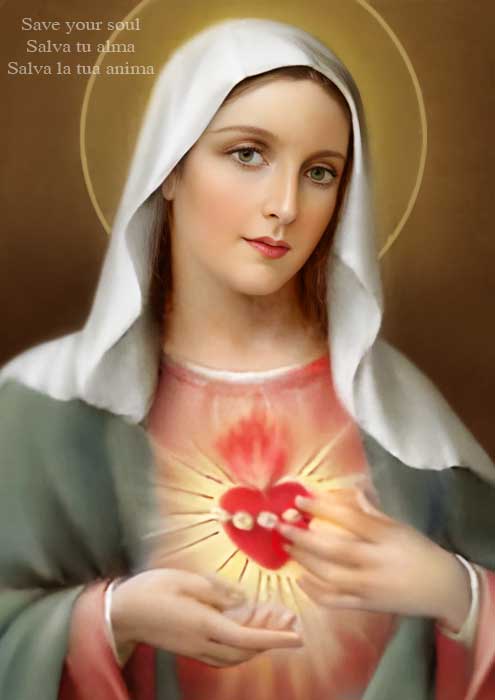
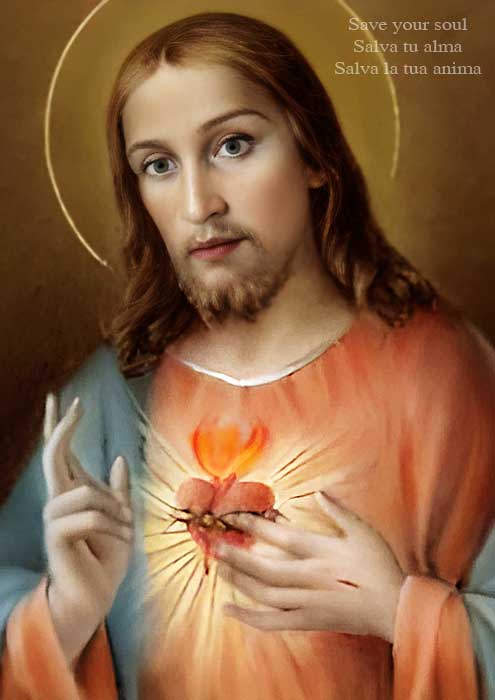
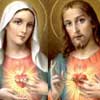 "O Hearts of Jesus and Mary; I consecrate myself, I consecrate my family and the whole world, to your Most Beloved Hearts. Listen to the supplication which I making to you and accept our hearts in Yours, to be delivered and protected we, the whole world, from all evil and all sin. May the protection of your Two Hearts be refuge, strength, and protection, in the daily spiritual struggles. That the power of your Two Hearts irradiates the world so that it is protected from evil and sin. We willingly consecrate ourselves and consecrate all mankind to your Hearts; sure and confident, for your Great Mercy, to obtain the victory over the forces of evil in this world, and the eternal Glory in the Kingdom of God. Amen"