Pray the Rosary daily! Obey the Commandments! Stay in Grace with the Sacraments.
HOW TO CHOOSE BETWEEN GOOD AND EVIL?
 God the Father: «It is through PRAYER that you will find the answer. It is through the SACRAMENTS that you will strengthen your faith and finally, it is through the EUCHARIST that you will know the Truth. Those who do not pray cannot be saved, for it is in union with Heaven that all must live».
 The Blessed Virgin Mary: «WITHOUT CONVERSION, you will not be able to weather this deluge of calamities that will purify this Earth, which is suffering the repercussions of sin» (From the messages given to Robert Brasseur, Canada).
PRAY FOR THE CHURCH
Pray for the Church, for Pope Leo XIV, the Cardinals, the Bishops, and the validly ordained clergy during this time of confusion and apostasy. Do not fall into the trap of division, even if it seems to be for good reasons. Look to the lives of the saints, such as St. Martin de Porres and St. Padre Pio of Pietrelcina, the former discriminated against because of the color of his skin, the latter fought against by the Church itself. Let their behavior in adversity be an example to you…
Keep on reading…
Call back to the fold of the Catholic Church those consecrated persons and lay people who have left or renounced it. Keep yourselves out of the sandstorm of division that comes from the Evil One and his minions; do not unconsciously play his game by dispersing yourselves in useless controversies. Ask the Holy Spirit with humility and through prayer, preferably through the intercession of the Blessed Virgin Mary, His Spouse, for the answer to the many questions about the events of the Church in these End Times. In patient waiting, the Lord will not deny you the explanation with His light, and you will be at peace. Pay attention to the words of consecration during Mass. Remember that “the will of men is null when it does not consent to the will of God. Indeed, the contrary will of men becomes a servile instrument of the eternal Will.” Leave the management of events to God; be prepared and in Grace. Pray, as requested by the Blessed Virgin Mary, for the sanctification of the clergy and laity. Set a good example in the House of the Lord, be faithful, and do not abandon the Catholic Church. Do not follow the heresy of Modernism.”
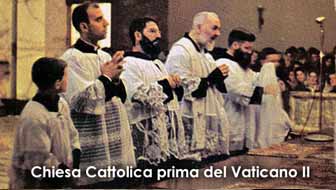
Honoring God in His House…
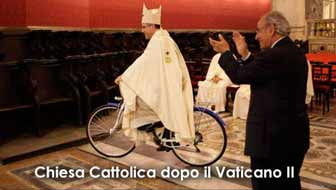
Time is wasted in the House of God, chastisements and eternal damnation pile up.
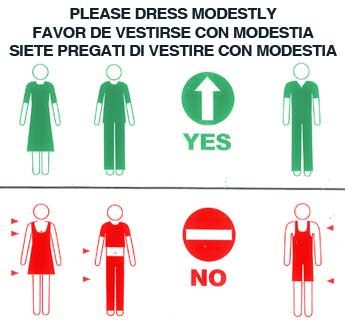
DRESS MODESTLY IN CHURCH
 “The Church is God’s house. It is forbidden for men to enter here with bare arms and wearing shorts. It is forbidden for women to enter wearing trousers, bare headed, with short, low-necked or sleeveless dresses.”
—San Pio of Pietrelcina
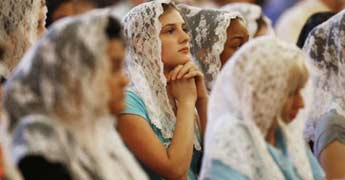
Wearing Veils in Church increases spiritual light and stregthens faith. (Learn more…)
MODESTY ON WEDDING DAY
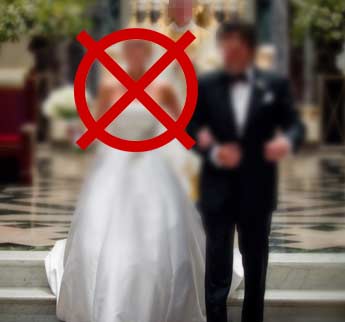
Dress Properly in the House of God the day of your Wedding (…Losing Blessings)
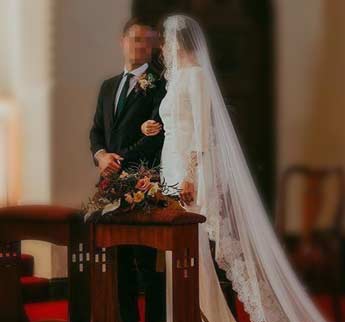
(Earning Blessings…) to face storms and dangers in married life and to earn salvation for spouses and children.
PARENTS BE VERY ATTENTIVE WITH YOUR CHILDREN
“Parents, be very attentive with your children”
 “Be very careful with what your children see, read, listen and play. I tell you this because the instruments of Evil, are using technology to slowly poisoning young souls through games, music, movies, videos, TV shows and literature loaded with subliminal messages that are driving many to spiritual and even physical death.” -Maria Mother of Jesus
“The family that prays together stays together”
 “Parents, correct the ways if your family, have much dialogue with your children, make time to listen to them as many homes are being lost due to lack of love, dialogue, understanding and most specially for not inviting God. Take God back into your homes, pray my Holy Rosary, as the family that prays together stays together.” -Maria Mother of Jesus

“My children, to tattoo your bodies is a pagan practice that goes against God’s Holy Word which reads: Do not lacerate your bodies for the dead, and do not tattoo yourselves (Leviticus 19,28).
Leggi tutto…
“bodies are a temple of the Holy Spirit and you should not defile, destroy or burn it. I remind you that all those body markings come from my adversary and are evil instruments that only seek to defile God’s creation and take you away from the path of salvation. Do not continue to tattoo your body, because this does not please God, and for this you will have to give an account tomorrow.”
– Maria Mother of Jesus

“My children, playing ghosts, charlie – charlie, or scissors and spiral notepad are the same as playing ouija. It is same as opening …
Keep on reading…
“…your soul’s doors so that my adversary and his demons can enter and possess you. NO game where one requests information from the afterlife is good. Don’t think that by invoking the souls of your departed loved ones it will be them who will come responding to your call. I tell you that by doing this what you are opening are the doors of Hell. You know very well that my adversary is astute and disguises as an Angel of light to mislead you in order to take your soul. Many children and young adults are being trapped by my adversary by playing games where they request information and assistance form occult sources. My little children, when playing those apparently innocent games what you are really doing is opening your soul to my adversary so that he may possess you.” -Maria Mother of Jesus

“My little children, when playing those apparently innocent games what you are really doing is opening your soul to my adversary so that he may possess you. Parents, pay much attention to…”
Keep on reading…
“…the video games that your children play as many of them are filled with occult rituals and actions with the sole purpose of opening the minds of your children and youth to violence, trespassing, sex, drugs, homosexuality, prostitution and murder.” -Maria Mother of Jesus

“[Parents] pay attention to the cartoons that your children watch as many are loaded with subliminal messages of violence, sex and all other sins of the flesh that will lead your children to lose their moral and spiritual values,…”
Keep on reading…
“…and the saddest of all: the distancing from God and family. Awaken from your passiveness parents! Don’t continue to be so permissive with your children. Remember that you are living in times of darkness and must be attentive with all that your children see, play read and listen. This so that tomorrow you won’t regret their misbehavior, and worse losing their souls.”
-Maria Mother of Jesus
CONSECRATION TO THE UNITED HEARTS
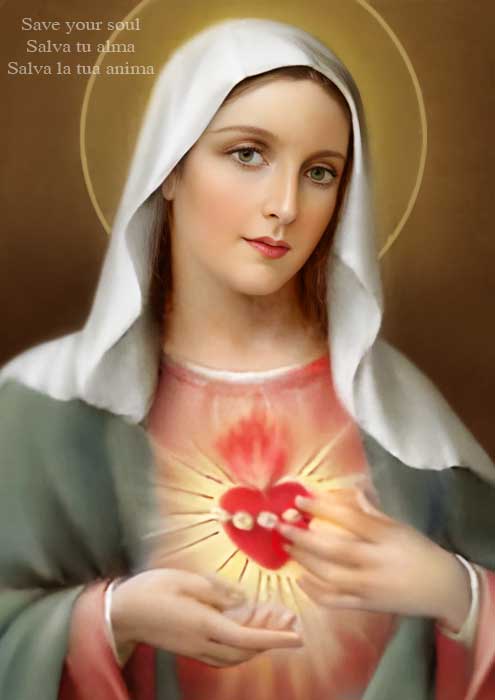
Consecration to the Immaculate Heart of Mary
(Cumulative consecration where one prays, sacrifices, covers, compensates and protects the rest of his family, friends, enemies, acquaintances, near and far, past and present.)
O Immaculate Mother of Jesus and Our Mother, Who appeared at Fatima to the three shepherd children to bring to the world a message of peace and salvation, I consecrate myself, together with all the souls whom I think of, whom I meet, whom I love, with whom my life comes into contact - on this (solemn) day which the Lord has granted me- to your Immaculate Heart, in order for us to belong more perfectly to Jesus so that none may be lost.
Help us live faithfully our consecration with a life wholly spent in the love of God and neighbor, and in particular we offer you our prayers, actions, joys, and sufferings of this day, in reparation for the outrages, sacrileges, indifferences, blasphemies, impurities, scandals, offenses, insults, by which He Himself is offended, and by the infinite merits of His Most Sacred Heart, and through the intercession of Your Immaculate Heart, I ask you for the conversion and salvation of the poor sinners.
I promise you to pray the Holy Rosary daily, for all the world; to live always as - (a true son of Yours) (a true daughter of Yours) - and to cooperate so that all may love You as Mother of Jesus, and Our Mother. Amen.
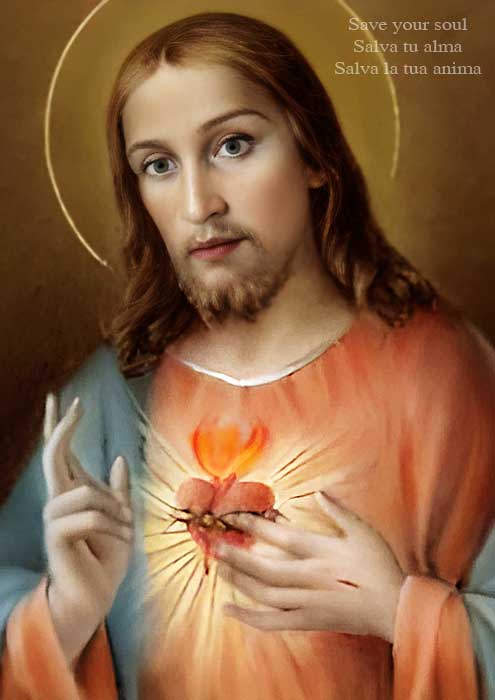
Pope Leo XIII: Daily Consecration of the Human Race to the Sacred Heart of Jesus
Prayer of Consecration that Our Lord Jesus is asking to recite daily for protection against the imminent catastrophic events: devastation by earthquakes in many parts of the world; extreme weather; floods; wars; persecution of the Church; new pandemics; loss of freedom... (Read more…)
Most sweet Jesus, redeemer of the human race, look down upon us, humbly prostrate before your altar. We are yours and yours we wish to be; but to be more surely united with you, behold each one of us freely consecrates himself today to your most sacred heart. Many, indeed, have never known you, many too, despising your precepts, have rejected you. Have mercy on them all, most merciful Jesus, and draw them to your sacred heart. Be you king, O Lord, not only of the faithful who have never forsaken you, but also of the prodigal children who have abandoned you; grant that they may quickly return to their father’s house, lest they die of wretchedness and hunger. Be you king of those who are deceived by erroneous opinions, or whom discord keeps aloof, and call them back to the harbor of truth and unity of faith, so that soon there may be but one flock and one shepherd. Be you king also of all those who sit in the ancient superstition of the Gentiles, and refuse not you to deliver them out of darkness into the light and kingdom of God. Grant, O Lord, to your Church, assurance of freedom and immunity from harm; give peace and order to all nations, and make the earth resound from pole to pole with one cry: Praise to the divine heart that wrought our salvation; to it be glory and honor forever. Amen.
Consecration morning and night to the Hearts of Jesus and Mary
 "O Hearts of Jesus and Mary; I consecrate myself, I consecrate my family and the whole world, to your Most Beloved Hearts. Listen to the supplication which I making to you and accept our hearts in Yours, to be delivered and protected we, the whole world, from all evil and all sin. May the protection of your Two Hearts be refuge, strength, and protection, in the daily spiritual struggles. That the power of your Two Hearts irradiates the world so that it is protected from evil and sin. We willingly consecrate ourselves and consecrate all mankind to your Hearts; sure and confident, for your Great Mercy, to obtain the victory over the forces of evil in this world, and the eternal Glory in the Kingdom of God. Amen"