
The voice came from nowhere and from everywhere…
“If you only knew how much I suffer, please pray for me. I suffer intensely everywhere.”
§1. Introduction
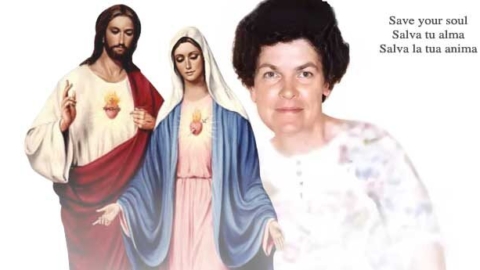
§2. Who was Sister María de la Cruz?
§3. And who was Sister Gabriela?
§4. Questions about Purgatory
4.1. Where is Purgatory?
4.2. Do you see God in Purgatory?
4.3. How is Purgatory divided?
4.4. Do they receive visitors in Purgatory?
4.5. What is the best prayer for the souls in Purgatory?
4.6. Can the souls in Purgatory pray for us?
4.7. Why do religious suffer more in Purgatory?
4.8. Are there abandoned souls in Purgatory?
4.9. Do some souls undergo their Purgatory outside of Purgatory?
4.10. Are there souls who go directly to Heaven?
4.11. What about those who die a sudden death? What happens to them?
4.12. And what of those who were indifferent to God during their lives?
4.13. Do priests and religious also suffer greatly in Purgatory?
4.14. How do the souls in Purgatory recognize one another?
4.15. Is there hope in Purgatory?
§5. Conclusion
(Reading: 10-12 mins)
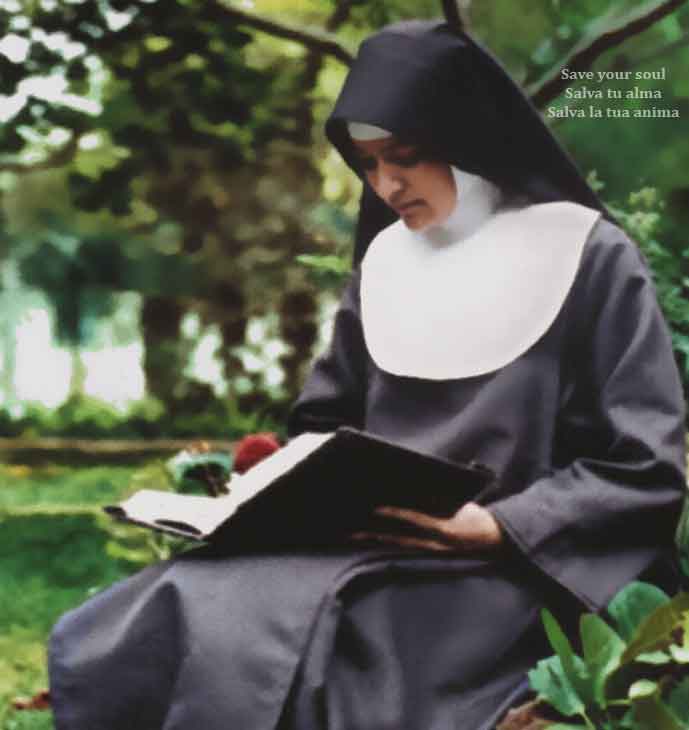
For years, Sister María Gabriela, a nun who died in 1871, appeared to Sister Maria de la Cruz (Elisa Hébert) to describe her process of purification in Purgatory, providing her with a detailed account of the reality of that painful place and of God’s love.
§1. Introduction
It was February 15, 1874, at the Augustinian convent in Balognes, France. Sister Mary of the Cross was alone in her cell when she heard those words. They were not thoughts, nor were they a figment of her imagination; it was a clear, desperate, pleading voice, and she knew exactly whose it was. It was the voice of Sister Mary Gabriel, her former convent companion, who had died nearly three years earlier and was now speaking from Purgatory. Since November 1873, Sister Mary of the Cross had been hearing moans—prolonged, painful moans—that pierced the convent walls as if coming from another dimension. At first, she did not understand. She prayed, trembled, and begged God to show her what it meant. Until that February morning, when the moans turned into words. And the words revealed a terrible mystery: Sister Gabriela was trapped in the purifying fire, paying for her sins, and needed prayers. Many prayers.
§2. Who was Sister María de la Cruz?
Her baptismal name was Elisa Sofia Clementina Hébert. Born in Nee, St. Georges, on December 1, 1840, she had embraced the religious life while still a young woman. She was a simple, obedient nun, devoted to prayer and silence. She did not seek mystical phenomena; she did not desire revelations. But God, in His infinite wisdom, chose her for an extraordinary mission: to be the spokesperson for a soul in Purgatory, so that the world would not forget the reality of that place of atonement.
§3. And who was Sister Gabriela?
A nun from the same convent, who died on February 22, 1871. At 36 years of age, Gabriela had been a sister full of life, but also full of imperfections. She confessed this herself. She had irritated her Mother Superior, had been a source of trouble for other sisters, had broken religious silence, had let her eyes wander where they shouldn’t. She had said her prayers distractedly. She had not committed mortal sins, but she had not been faithful to her vocation with the fervor God expected, and now she was paying for all of that. For 16 years, from 1870 to 1890, Sister Gabriela spoke from the beyond, and Sister María de la Cruz recorded every word. Sister María de la Cruz’s dialogues with the soul of Sister Gabriela belong to the realm of private revelations. Upon examining them, the Church determined that they contain no doctrinal error, but that does not mean that every detail described is dogma.
§4. Questions about Purgatory
Gabriela answered questions—questions that humanity has always wanted to ask.
- Questions about death…
- About the afterlife…
- About God and Hir answers….
4.1. First Question: Where is Purgatory?
And the answer was striking. According to Sister Gabriela’s account, Purgatory is said to be at the center of the earth, near Hell—a symbolic way of expressing the depth and gravity of that purification, not a geographical definition that the Church imposes as doctrine. She describes in very powerful and symbolic language that thousands upon thousands of souls would arrive, many between the ages of 30 and 40, and that their years in Purgatory seemed like 10,000 to them. It is not a mathematical fact, but a way of conveying the intensity of the suffering and the seriousness of the spiritual life.
4.2. Second question: Do you see God in Purgatory?
No, Gabriela replied. We do not see God in Purgatory. If we saw Him, it would be Heaven. And this is our greatest torment—not seeing God. It is a continuous martyrdom. That causes me to suffer more than the fire of Purgatory, more than the fire, more than any physical pain. The absence of God is the true hell for the soul that has already known Him.
4.3. Third question: How is Purgatory divided?
Gabriela describes Purgatory in three major stages, a mystical image to speak of different degrees of purification. The Catholic Church does not officially establish this division, but it accepts that there are various degrees of suffering and purification according to each soul.
- Gabriela speaks of the great Purgatory, where she remained for two years without being able to give any sign of the torments she was suffering.
- Then comes the second Purgatory, where the suffering is very great, but less so than in the first.
- And finally, the Purgatory of desire, where there is no fire, but where the souls who did not ardently desire Heaven, who did not love God enough, suffer the terrible longing for the beatific vision.
4.4. Fourth question. Do they receive visitors in Purgatory?
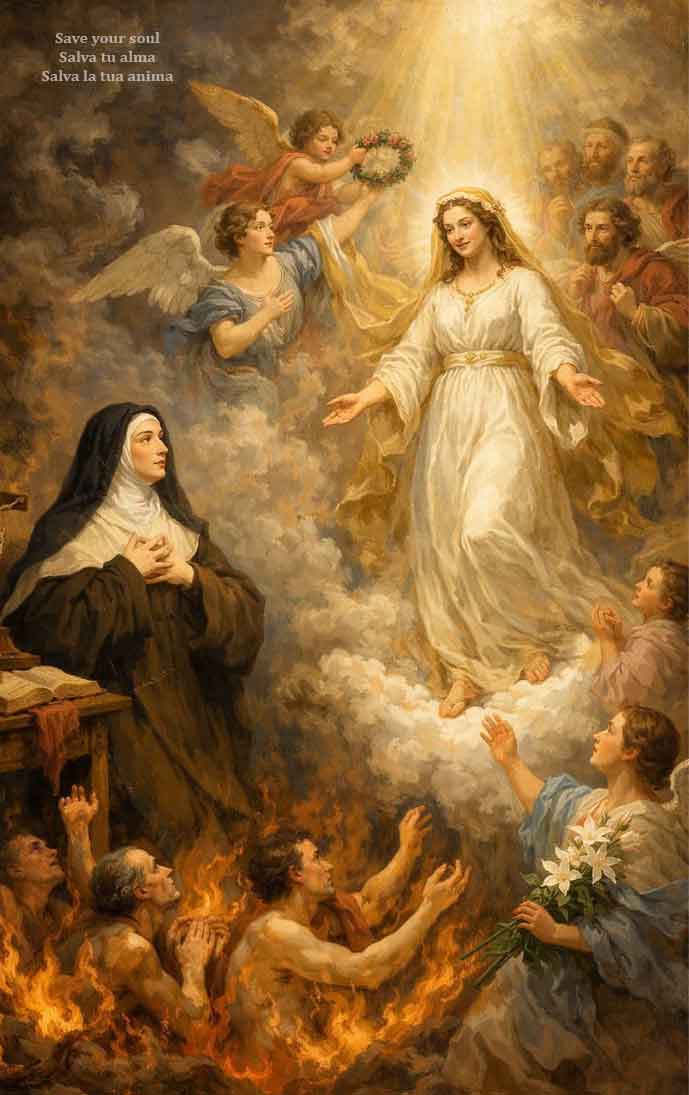
Yes. Gabriela said with almost palpable joy. The Blessed Virgin comes to Purgatory on her feast days and returns to Heaven with many souls. While She is with us, we do not suffer. St. Michael accompanies her. He is the highest-ranking Angel in Heaven. He is among the Seraphim. It is he who leads the purified souls to Heaven. Our guardian angels also come to see us. Imagine the consolation of those souls upon seeing the face of the Mother of God passing through the flames to take them with her.
4.5. Fifth question. What is the best prayer for the souls in Purgatory?
The answer was categorical. After Holy Mass, the Stations of the Cross is the best prayer. And if you offer it with the right intention, God accepts everything you do for all the souls in Purgatory, even if you apply it to a particular soul—a Mass, the Stations of the Cross, a Rosary well prayed—these are powerful weapons against the purifying fire.
4.6. Sixth question: Can the souls in Purgatory pray for us?
Yes, I can pray right now, and I will do so every day. You will realize that the souls in Purgatory are not ungrateful. Gabriela affirms that the souls in Purgatory are very grateful and that God, in His mercy, powerfully answers the prayers made through them. This is a spiritual opinion, not an official comparison with the intercession of the saints in Heaven. They pray, they intercede, and their gratitude is eternal.
4.7. Seventh question: Why do religious suffer more in Purgatory?
Purgatory for religious is much longer and more rigorous than for people in the world, because they abused graces. Purgatory is terrible for religious who caused problems for their superiors. A special punishment is reserved for them. To whom much is given, much will be required. This is God’s justice.
4.8. Eighth question. Are there abandoned souls in Purgatory?
Many, Gabriela replied sadly. Many nuns are abandoned in Purgatory through their own fault, for no one remembers them. People in the world do not think about this. When they lose their relatives or friends, they say a few prayers, cry for a few days, and that is the end of it. The souls are left abandoned. She insists that God takes our attitudes toward the deceased seriously. Whoever forgets the souls in Purgatory runs the risk of also being little remembered after death. It is a spiritual warning, not a mathematical formula, because God’s mercy always goes beyond our own.
4.9. Ninth Question: Do some souls undergo their Purgatory outside of Purgatory?
Yes, there are souls who do not remain in Purgatory proper. Some undergo their Purgatory in the places where they sinned, at the foot of the holy altars where the Blessed Sacrament is found. But the place does not matter because they carry their suffering with them. For example, I can accompany you wherever you go, but while you rest at night, I suffer more, because then I am truly in Purgatory. Purgatory is not just a place; it is a state of purification that can occur anywhere.
4.10. Tenth question: Are there souls who go directly to Heaven?
Yes, said Gabriela. Our Mother Superior has been in Heaven since the day of her death. Thanks to her suffering and her great charity, there is hope, there is mercy, there is a direct path to eternal glory.
4.11. Eleventh question: What about those who die a sudden death? What happens to them?
Gabriela’s answer made Sister María de la Cruz shudder. She compares the most painful part of Purgatory to a temporary hell to express how terrible the suffering of those souls is, but always with the decisive difference.
In Purgatory there is love, praise, and hope, while in hell there is hatred and eternal despair. There are the sinners who committed terrible crimes during their lives and whose death caught them in that state. It was almost a miracle that they were saved, often through the holy prayers of their parents or other pious people. Sometimes they didn’t even have time to go to confession, and the world considered them lost. But God, whose mercy is infinite, granted them at the moment of death the repentance necessary for their salvation on account of one or more good deeds they performed during their lives. Sudden death, an accident, a heart that stops without warning. How many souls find themselves in that situation? Saved by a hair’s breadth, by a last-second contrition, but condemned to long purgations because they did not have time to confess.
4.12. Twelfth question: And what of those who were indifferent to God during their lives?
Then, said Gabriela, there are the souls who, although they did not commit great crimes, were indifferent to God, did not observe the Easter precepts, and also converted at the moment of death. Perhaps they were unable to receive Holy Communion. They will be in Purgatory because of their long years of indifference. They suffer unspeakable pains and are practically abandoned because almost no one prays for them. The prayers offered are few, and according to the account, God applies them in accordance with His Justice. But they bear a heavy burden for the years of indifference in life. Indifference, the silent sin, the sin of one who did no harm to anyone, but did no good either. The sin of those who lived as if God did not exist.
4.13. Thirteenth question: Do priests and religious also suffer greatly in Purgatory?
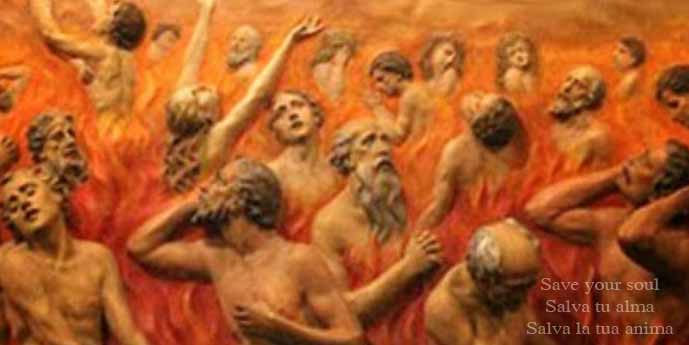
Religious of both sexes who were lukewarm, negligent in their duties, and indifferent to Jesus are in this phase, Gabriela revealed. And also priests who did not exercise their sacred ministry with the reverence due to the Sovereign Majesty and who did not fully imprint God’s love on the souls entrusted to their care. I was in this phase of Purgatory—the consecrated, those who received the divine call, those who promised everything to God. If they were lukewarm, negligent, or indifferent, Purgatory awaits them with rigors that make the common fire seem like a gentle breeze.
4.14. Fourteenth question: How do the souls in Purgatory recognize one another?
Yes, in the way souls know one another. There are no names in the other world. You cannot compare Purgatory with the earth. When the soul is free and liberated from its mortal shell, its name is buried in the grave along with the body. Names remain on earth. In the hereafter, souls recognize one another in another way—by their essence, by the light they carry, by the degree of purification attained.
4.15. 15. Fifteenth question: Is there hope in Purgatory?
“Yes,” said Gabriela, and her voice seemed to smile. “No soul wants to return from Purgatory to earth. We already have a knowledge of God infinitely superior to yours. We do not want to return to the darkness of this world. Despite the terrible suffering, the certainty we have that one day we will be with God sustains us. This is the great difference between the suffering of Purgatory and that of the earth.” In Purgatory, even though the pain is unbearable, hope is unshakable. Hope. In the midst of the fire, in the midst of the darkness, in the midst of the longing for God, there is hope. Because Purgatory is not condemnation; it is purification; it is a path. It is the final stage before eternal glory.
§5. Conclusion
Sister María de la Cruz’s manuscript was examined by respected theologians: Canon Paul Contrier and Canon Dubosque. The latter, who served as promoter of the faith in the canonization process of Saint Thérèse of the Child Jesus, studied these writings rigorously and concluded:
“There was no doctrinal error, no contradiction with the Catholic faith.”
The nun’s own spiritual director, Father Prebel, accompanied all the phenomena for 16 years and confirmed the authenticity of the accounts. We do not know for certain when Sister Gabriela’s soul was finally released into Heaven. The messages continued until 1890, but she made one thing clear before she departed.
“Afterward, for my part, I will pray for you. You will realize that the souls in Purgatory are not ungrateful.”
Sister Mary of the Cross lived until May 11, 1917, in Cherbourg. She carried with her the weight of those revelations, but also the certainty of having fulfilled God’s will. The manuscript she left behind remains alive, continues to warn, continues to save souls. Sister Mary of the Cross’s accounts add nothing new to the Gospel, but they serve as a powerful reminder of what the Church has always taught.
Purgatory is real, prayer for the dead is an act of charity, and God’s mercy reaches out to souls until the very end. May the example of Sister María de la Cruz and the voices she heard from Purgatory awaken us to the urgency of praying for those who have already departed. Because a Mass, a Rosary, or a Way of the Cross can free a soul from the flames and lead it into God’s arms. Because there is no greater charity than saving a soul that can no longer save itself, because love and prayer pierce even the fire of purification. And because one day in Heaven those souls will thank us forever.
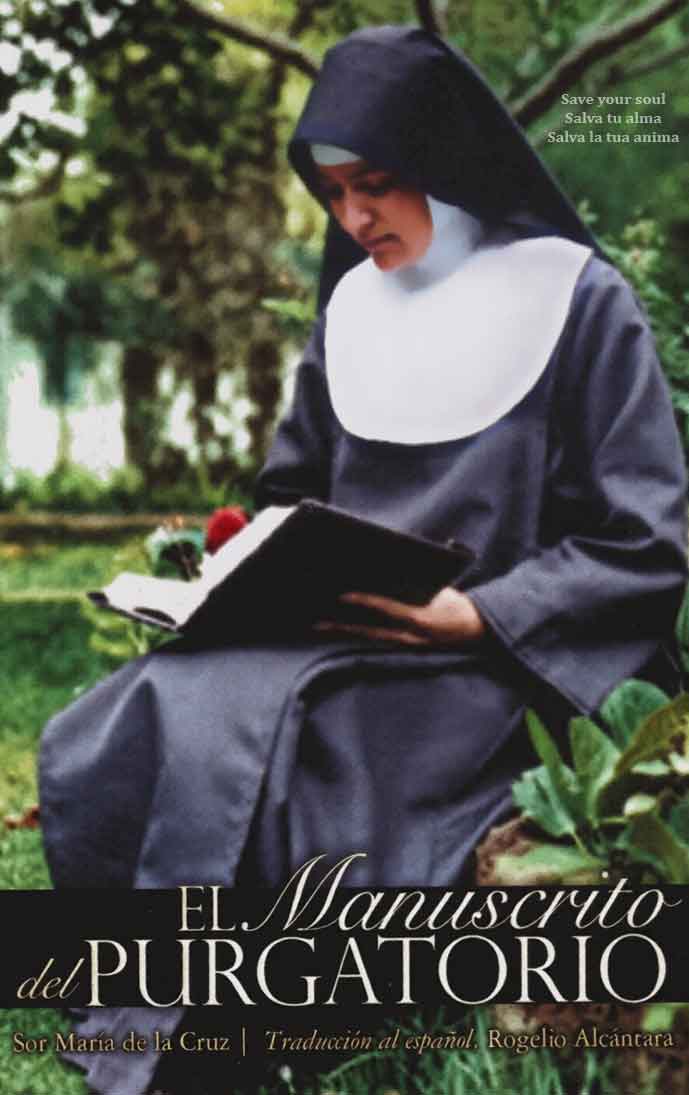
Preview of the book (Spanish) “The Manuscript of Purgatory”– Sister María de la Cruz (PDF):
https://mifecatolica.net/wp-content/uploads/el-manuscrito-del-purgatorio.pdf


 God the Father: «


 "If you knew how you shine after duly approaching the Sacrament of Confession. "Jesus is in the Confessional and He hears every word, sees into every corner of your heart and Is eager to bestow the graces inherent in His Forgiveness.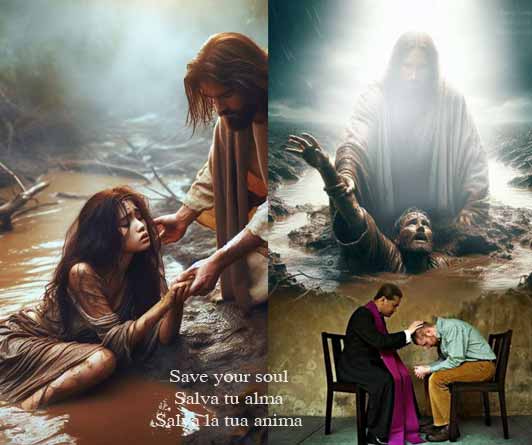
 "I ask to end to this abomination! No more of extraordinary Ministers of the Eucharist, no more of Communions in the hand!"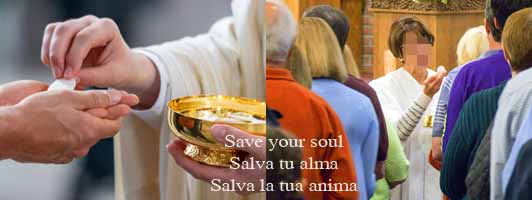
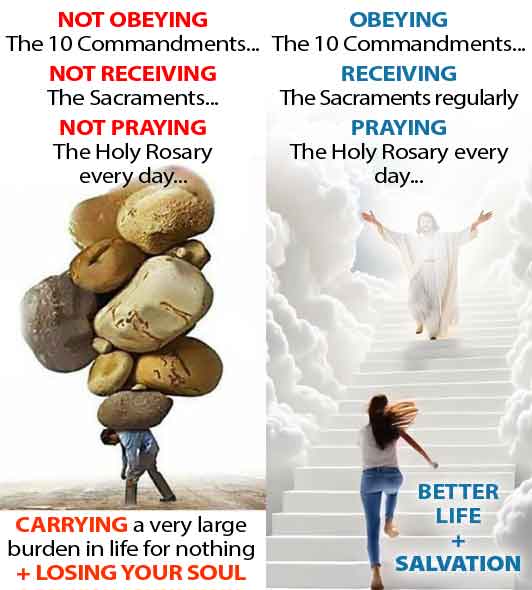
 "Oh Jesus of Divine Mercy, hear my pleadings to you, for I am here to do your Will!"
 "I place myself in the presence of the Most Holy Trinity (Father, Son, and Holy Spirit) and by the power of the Blood of Our Lord Jesus Christ, I break, undo, trample, annihilate, render ineffective, and erase from my physical, psychic, biological, and spiritual being every curse that has been placed on me, on my family and family tree, on any person, family member, or ancestor through acts of occultism or spiritism. By the power of the Precious Blood of Our Lord Jesus Christ and through the intercession of the Blessed Virgin Mary, St. Michael, St. Gabriel, and St. Raphael, I break and render ineffective every curse, whatever its nature, in the Name of our Lord Jesus Christ. Amen (Repeat the prayer 3 times)"
  "O glorious St. Joseph! by your profound humility, by your unalterable meekness, by your invincible patience, by your angelic purity and perfect fidelity that made you a timely imitator of the virtues of Jesus and Mary, I ask you to console me in all my sorrows, to guide me in all my doubts, to defend me in all temptations, to deliver me from all spiritual and material dangers; to extend your arm against all my visible and invisible enemies, breaking and destroying all the snares and barriers that they tend and arm against me. Amen."
  "Oh, blessed Saint Michael, protect us from the attacks and snares of the evil spirits because you know full well that we are poor mortals, fragile and weak, in need of the Mercy of God and of your protection to fulfill the mission that Heaven has commissioned to us. Oh, Saint Michael, may your victorious cry: “who is like God? no one is like God”, suppress and cast into Hell satan and all the evil spirits who prowl about the world seeking the destruction of souls. Amen"
 Come, Holy Spirit, send to us from Heaven a ray of your light. Come, Father of the poor, come, giver of gifts, come, light of hearts. Perfect comforter, sweet guest of the soul, sweetest relief. In toil, rest, in heat, shelter, in weeping comfort. O most blessed light, invade into the depths the hearts of your faithful. Without your strength nothing is in man, nothing is without fault. Wash what is sordid, bathe what is parched, heal what bleeds. Bend that which is stiff, warm that which is icy, straighten that which is astray. Give to your faithful who trust in you alone your Holy Gifts. Give virtue and reward, give holy death, give eternal joy. Amen.
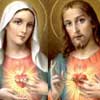 "O Hearts of Jesus and Mary; I consecrate myself, I consecrate my family and the whole world, to your Most Beloved Hearts. Listen to the supplication which I making to you and accept our hearts in Yours, to be delivered and protected we, the whole world, from all evil and all sin. May the protection of your Two Hearts be refuge, strength, and protection, in the daily spiritual struggles. That the power of your Two Hearts irradiates the world so that it is protected from evil and sin. We willingly consecrate ourselves and consecrate all mankind to your Hearts; sure and confident, for your Great Mercy, to obtain the victory over the forces of evil in this world, and the eternal Glory in the Kingdom of God. Amen"